
The third cohort of the Australian-Grown Innovation (AGI) Build program will work closely with growers, industry experts and mentors to develop and validate solutions addressing real challenges across Australian horticulture.
The AGI Program, co-funded by Hort Innovation Frontiers and Startupbootcamp, supports growers, researchers, startups and industry innovators to transform early-stage ideas into commercially viable opportunities for Australian horticulture.
Throughout the program, the cohort will refine their solutions, strengthen their business models and explore pathways to commercialisation and industry adoption.
Anthony Kachenko, General Manager of Production and Sustainability Research & Development at Hort Innovation, said supporting emerging innovators was crucial for the industry.
“We’ve seen some incredible results through the AGI program, with innovative solutions that make growers more efficient, sustainable and profitable,” Mr Kachenko said.
“By supporting innovators we’re building on Australia’s proud history of practical problem-solving, and helping accelerate the development of tool and techniques that will strengthen Australian horticulture.”
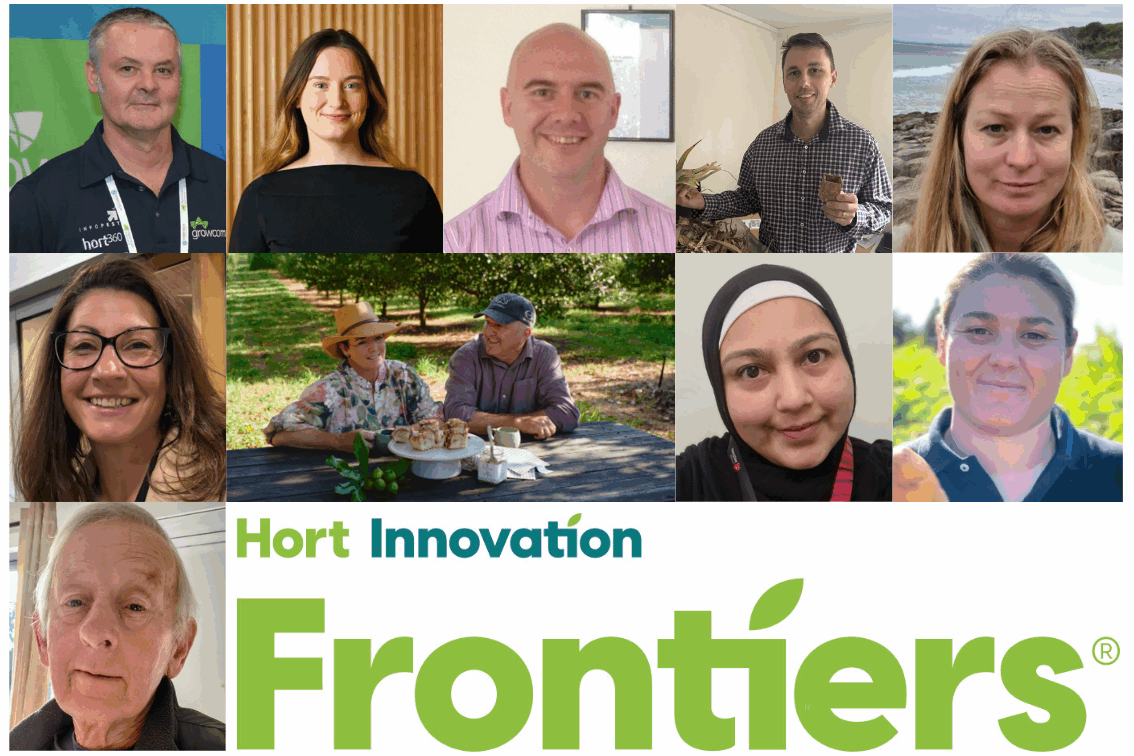
The latest cohort comes from across Australia’s horticulture sector, with participants involved in diverse fields such as berries, macadamias, potatoes and tropical fruit, as well as researchers looking at Varroa mite, international standards reporting, and agronomy.
The cohort includes:
Airponix seed Australia: Establishing an aeroponic seed potato facility using nutrient mist bioreactor technology to produce certified G0/G1 seed potatoes with lower disease risk and faster multiplication.
ExtensionAg: Using AI and expert review to translate horticulture research into grower-ready communications and track how effectively it reaches growers.
Gondwana Macadamias: Developing a rare, fully traceable Macadamia tetraphylla flower extract for perfumers and premium brands.
Haskaps of Tas: Testing grower appetite and market pathways to expand commercial Haskap berry production in Australia.
LP One: Developing construction panels from pineapple leaf fibre and a bio-based binder.
Macquarie University: Developing an in-hive lure that uses controlled olfactory cues to attract, repel or disorient Varroa mites while protecting honeybee health.
Platform Zero: A B2B fresh produce marketplace digitising wholesale trade, enabling 48-hour supplier settlement and reducing unsold stock and food waste.
Plant Nutrition Australia: The Crop Nutrition Compass helps agronomists create high-quality crop nutrition recommendations and strengthen their engagement with growers.
Queensland Fruit and Vegetable Growers: HortESG gives horticulture growers a smart process to document and report sustainability against domestic and international standards.
Rare Dragon Fruit: Testing a mobile shared processing facility that helps growers turn surplus, B-grade and weather-damaged produce into value-added products.
South Melbourne Market: Trialling commercially viable, plastic-free packaging and merchandising solutions that protect produce quality, support sales and improve the customer experience.
The AGI program forms part of Hort Innovation’s investment in building a stronger, more resilient and globally competitive Australian horticulture industry by connecting innovators with the expertise, networks and support required to turn promising ideas into real-world outcomes.
To date, the program has achieved an 83 per cent Net Promoter Score, supported 231 participant engagements, and maintained 65 per cent grower representation in the advanced stages of the program.
For more information about Australian-Grown Innovation, visit www.australiangrowninnovation.com.au.